When ISPs start a fiber build, most of their attention is on route design, permitting timelines, and getting shovels in the ground. Pole loading analysis often feels like a box to check — something the software handles.
It isn’t.
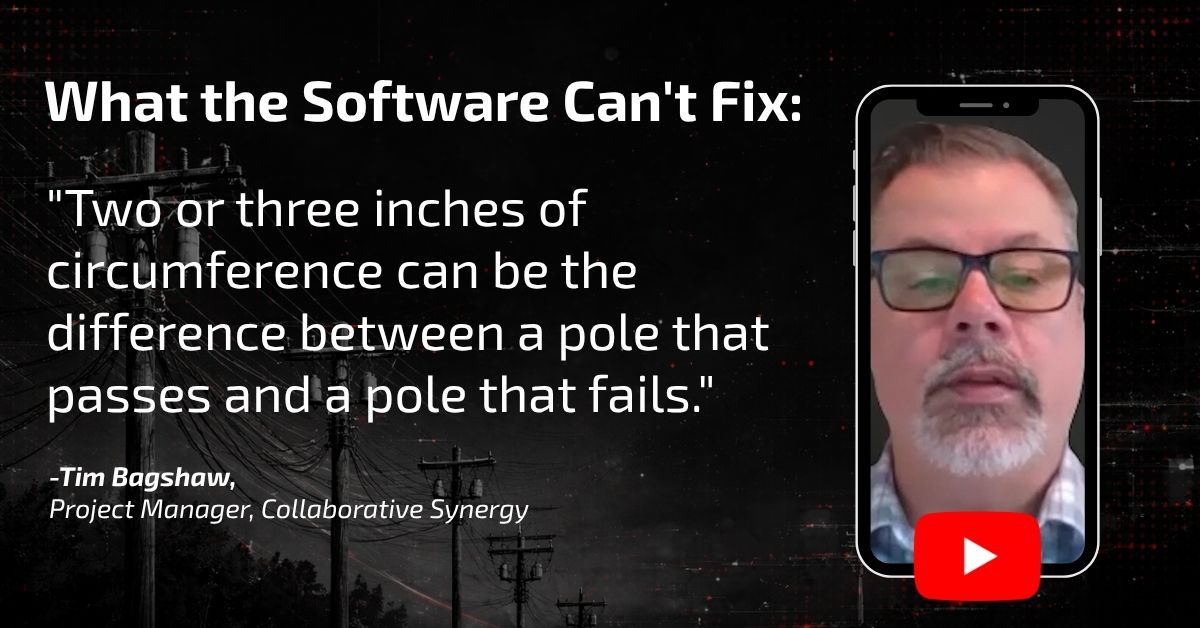
What most ISPs don’t realize until they’re deep into a project is how much the result depends on what goes into the model. Anchor shank size. Ground line circumference at the base of the pole. The difference between a ¾-inch anchor and a 1-inch anchor. Two or three inches of circumference. These aren’t rounding errors, they’re the difference between a pole that passes and a pole that fails.
And if a pole fails because the field data wasn’t accurate, you’re looking at $8,000 to $10,000 to replace it. Multiply that across hundreds or thousands of poles on a large-scale build, and the exposure adds up fast.
Click the graphic to hear Tim’s comments about the significance of collecting proper field data to preserve project timelines and costs on your broadband build.
The software isn’t the problem. O-Calc, SpidaCalc, and other loading platforms are sophisticated tools. But as with any model, what you get out is only as good as what you put in. Pre-populated or estimated field data produces pre-populated results — and those results can look fine until the review comes back with failures.
Collaborative Synergy has gone back out to refield poles that were initially flagged as failing. When we captured the actual measurements rather than assumed values, poles that looked like replacements turned out to be passable. That’s the outcome everyone wants: accurate data, accurate results, and no unnecessary capital spend.
For ISPs newer to this process, there’s often a learning curve around just how granular the data requirements are. That’s not a criticism — the level of detail isn’t obvious until you’ve been through a few review cycles. But getting it right the first time is always faster and cheaper than going back.
The field work isn’t glamorous. It’s also not where most ISPs focus their attention. But it’s where the math starts. And if the math starts wrong, the rest of the project pays for it.
If you’re planning a fiber build and want to make sure your pole loading data holds up on the first pass, Collaborative Synergy’s no-commitment onboarding makes it easy to get started. Learn how we support ISPs from fielding through permit submission at csynergy.com/cs-telco.
